

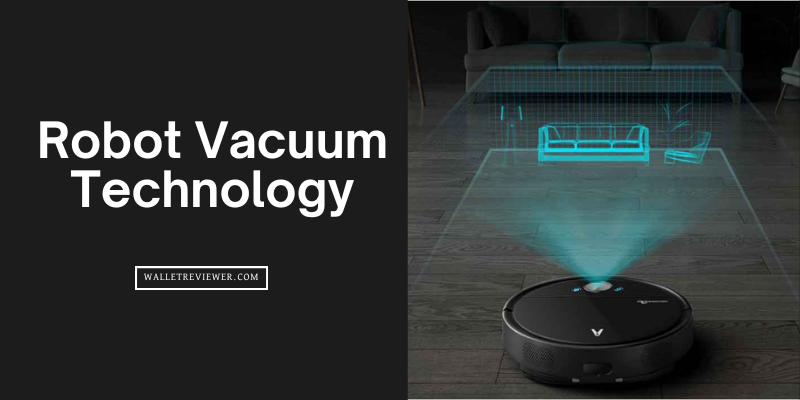
Robotic vacuum cleaners have quietly transformed modern households over the last two decades. Global sales exceeded $7 billion in 2025 and are expected to reach more than $27 billion by 2034.
You’re not alone if you’re busy and prefer to let a robot handle the repetitive chore of cleaning floors. They roam across your home, remove dirt, pet hair, and crumbs, and even mop hard surfaces while you relax or focus on more important tasks.
In this guide, you’ll find out about robot vacuum technology, why the technology keeps getting smarter, and what features really matter when you’re shopping.
Quick Summary: Robot vacuum technology includes LiDAR mapping, vSLAM camera navigation, AI obstacle detection, cliff sensors, dirt sensors, smart mapping, app control, voice control, automatic charging, self-emptying docks, mop lifting, and anti-tangle brush systems.
Robot Vacuum Technology #1: Central Processing Unit
The central processing unit, or CPU, manages every single calculation the robot performs during a cleaning cycle. You usually find ARM-based processors inside these machines, and they often have multiple cores to handle different tasks at once.
The processor runs at speeds between 1.2 GHz and 1.8 GHz in most high-end models like the Roborock or Ecovacs series. It processes data from the sensors, and it tells the wheels exactly where to go.
Honestly, the brain must make thousands of decisions every second, so the robot does not get stuck under your couch. The platform uses RAM to store the map of your house while the vacuum is actively moving. You get a much smoother cleaning experience when the processor is fast because the robot does not stop to think.
- The CPU handles the SLAM algorithms, which stand for Simultaneous Localization and Mapping.
- The Mainboard connects the processor to the battery and all the motor drivers.
- The Firmware is the permanent software that controls the hardware logic.
- The Memory stores your custom cleaning schedules and the permanent maps of your home.
Actually, the speed of the processor determines how quickly the robot can find its way back to the dock. A slow brain might cause the robot to wander around aimlessly until the battery dies. Right, you want a robot that knows the fastest path to the charger.
You will notice that expensive robots have better chips, and they map your rooms in just a few minutes. The technology inside the brain is the most important part of the whole system.
Read our guides: Best robotic vacuum cleaners reviewed
Robot Vacuum Technology #2: Lidar Navigation Uses Laser Light To Map Rooms
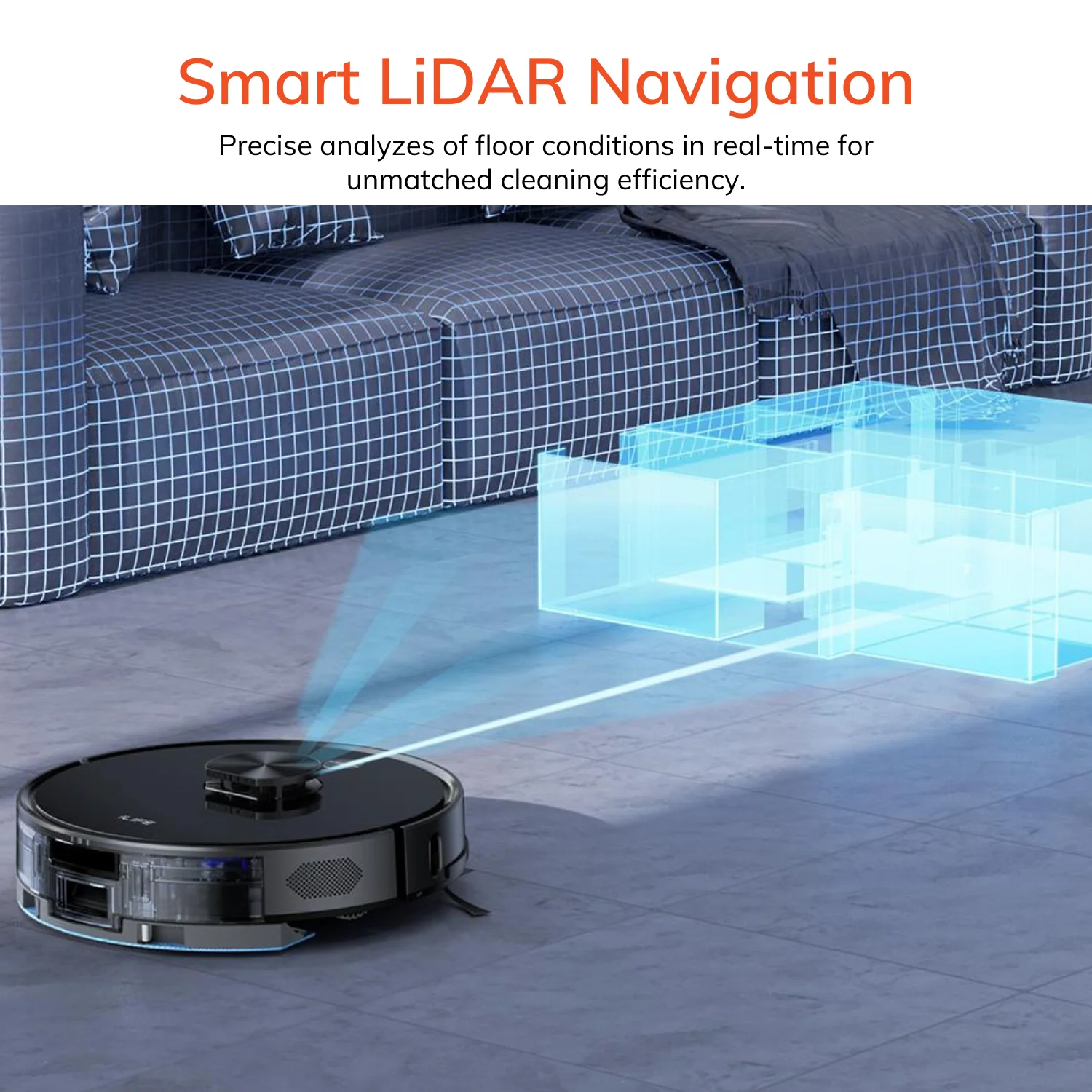
Lidar technology uses a spinning laser module to measure the distance between the robot and your walls. The sensor sits on top of the vacuum, and it spins at a rate of 5 to 10 rotations per second. It sends out laser pulses, and it measures how long the light takes to bounce back from an object.
Most robot vacuums use a 905nm class 1 laser because it is completely safe for humans and pets. You can think of it like a lighthouse that maps your furniture in 360 degrees.
The robot builds a 2D map with an accuracy of about 2 centimeters, and it uses this data to plan a cleaning path. Guess what, this system works perfectly in a dark room because it does not need any light from your lamps.
The Laser Distance Sensor, or LDS, is the most common name for this specific hardware piece. Look, the sensor can see objects up to 8 or 10 meters away in most cases. You will see the robot slow down before it hits a wall because the laser warned the processor. It creates a digital grid of your floor, and it marks every chair leg as an obstacle.
Anyway, Lidar is very reliable, but it can sometimes get confused by mirrors or glass doors. You should know that the laser light reflects off the glass, and the robot might think there is another room behind the mirror.
Robot Vacuum Technology #3: VSLAM Technology Uses Cameras For Visual Recognition
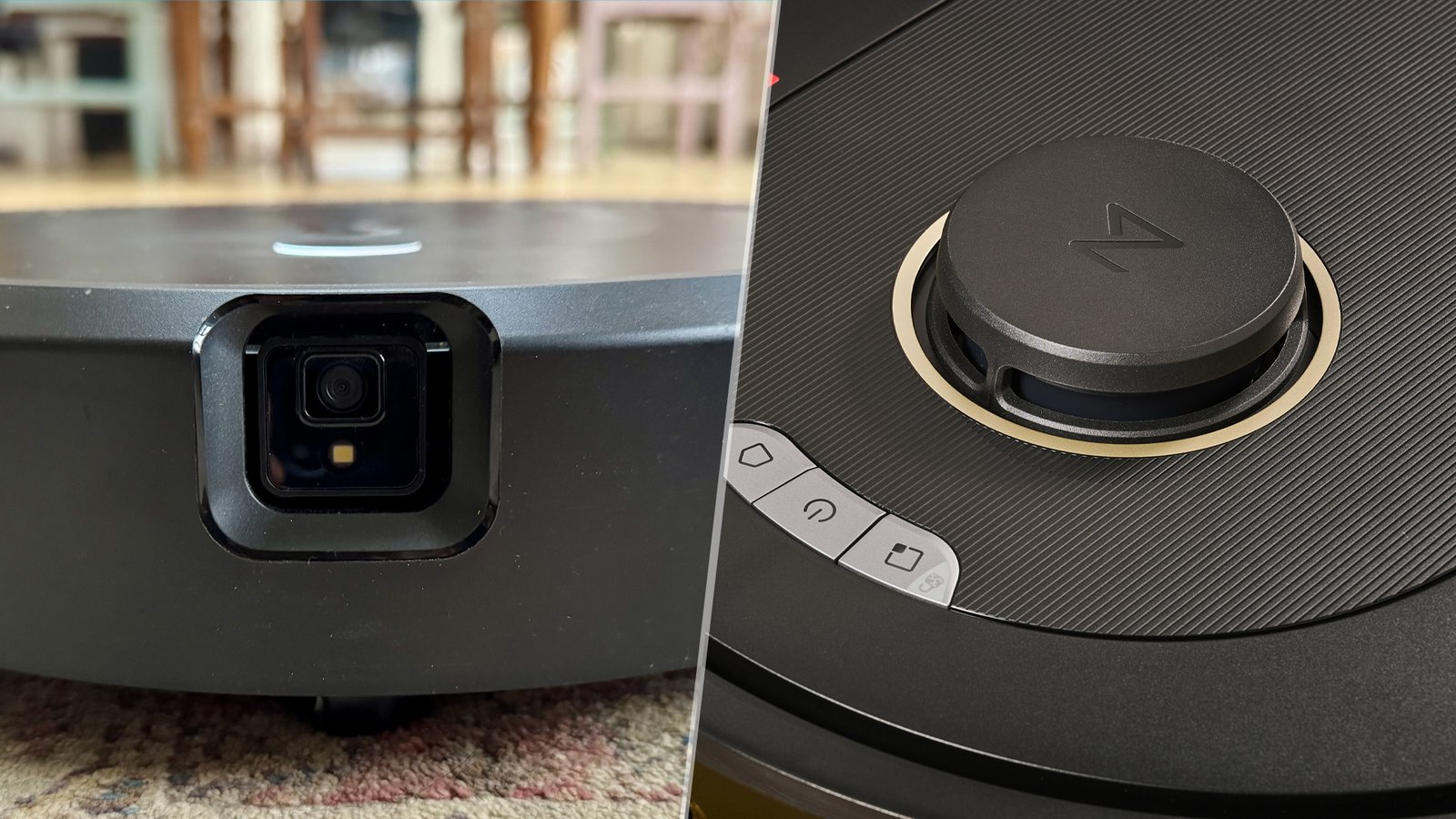
VSLAM technology stands for Visual Simultaneous Localization and Mapping, and it uses a camera to see your home. The camera captures images of your ceiling and walls, and it looks for visual landmarks. It identifies the corners of doors or the edges of picture frames to calculate their position.
You will usually find a 120-degree wide-angle lens on the top or front of the robot. The software compares the current image with the previous image, and it calculates the distance the wheels have moved.
Well, this method is very different from Lidar because the robot actually “sees” the objects. Actually, modern robots use AI chips to recognize specific items like shoes or power cables.
- The Image Sensor converts light into digital data for the processor.
- The Feature Extraction software finds unique points in your room to use as anchors.
- The Optical Flow sensor on the bottom helps the robot measure its movement over the floor.
- The Neural Network allows the robot to identify pet waste so it does not smear it across the rug.
Honestly, the biggest weakness of camera navigation is the lack of light. You cannot run a camera-based vacuum in total darkness because it will lose its way.
Look, the robot needs at least a small amount of light to identify the landmarks. Alright, some brands add an LED light to the front of the vacuum to help it see under your bed.
You will find that VSLAM models are often shorter than Lidar models because they do not have a spinning tower on top. This allows the robot to fit under lower furniture and clean more areas of your house.
Robot Vacuum Technology #4: Suction Power
Suction power tells you exactly how much pressure the vacuum motor can create to lift dirt. You will see this number listed in Pascal’s or Pa on the box of every robot vacuum.
Most standard models offer around 2,000 Pa of suction, but high-end versions can reach 8,000 Pa or even 15,000 Pa. You need more suction if you have thick carpets because the dirt hides deep in the fibers.
The motor inside is a brushless DC motor, and it spins a fan at very high speeds. The platform moves air through a HEPA filter, and it traps tiny dust particles inside the bin. Actually, the airflow is measured in Cubic Feet per Minute or CFM, and it is just as important as the Pa rating.
Roller Brushes Agitate Dirt From Carpet Fibers
The main roller brush sits in the center of the vacuum, and it spins to lift debris into the air stream. Most brushes spin at a rate of 1,200 to 1,500 RPM to beat the carpet fibers. You will find two main types of brushes, which are bristle brushes and silicone rubber brushes.
The bristle brushes are great for picking up fine dust, but hair gets tangled in them very easily. The rubber brushes are much better for pet owners because the hair slides off into the suction path.
It often uses a floating brush housing, which allows the brush to stay close to the floor even on uneven surfaces. Well, this design ensures that no suction is lost as the robot moves from tile to carpet.
- The Side Brush spins to pull dirt from the corners and edges into the center.
- The Anti-Tangle tech uses small blades to cut hair before it wraps around the axle.
- The Dual-Brush system uses two rollers spinning in opposite directions for better pickup.
- The Bristle Density determines how well the brush can “scrub” the floor surface.
Actually, the side brushes are very important because the circular shape of the robot cannot reach the very corners of your room. The long bristles of the side brush flick the crumbs into the path of the main roller. You should clean these brushes at least once every two weeks to keep them working perfectly.
Robot Vacuum Technology #5: Lithium-Ion Batteries
The lithium-ion battery inside the vacuum determines how many square feet the machine can clean in one session. You will find that most batteries have a capacity between 2,600 mAh and 5,200 mAh. These batteries usually operate at 14.4 volts, and they provide enough energy for 120 to 180 minutes of cleaning.
The robot monitors the voltage constantly, and it knows when the power is getting low. You will see the robot stop cleaning when the battery hits 15% or 20%, and it will drive back to the base.
The robot uses a BMS or Battery Management System to prevent the cells from overheating or overcharging. Totally agree, a good battery is the heart of the machine because it keeps everything running.
The charging process usually takes about 3 to 5 hours to reach a full charge. You will find that the battery life decreases over time, and you might need to replace it after 2 or 3 years. Right, the cells can usually handle about 500 to 1,000 charge cycles before they lose their capacity.
You can extend the life of the battery if you keep the dock in a cool place away from direct sunlight. The technology inside the battery allows for high-current discharge, which is necessary for the high-power suction modes.
Actually, if you have a very large house, you should look for a robot with a “Resume” feature. The robot will charge its battery, and then it will go back to the exact spot where it stopped cleaning.
Robot Vacuum Technology #6: Cliff Sensors
Cliff sensors are small infrared modules located on the bottom of the robot, and they keep it safe from drops. The sensor sends an infrared beam downward, and it waits for the light to reflect back.
The light travels back very fast when the floor is right under the robot. The light never returns if the robot drives over a set of stairs or a high ledge. The processor sees this “missing” signal, and it tells the wheels to stop and reverse immediately.
You will usually find 4 to 6 cliff sensors around the edges of the machine. Honestly, these sensors are the only reason your expensive robot does not break into pieces at the bottom of the stairs.
Look, these sensors can sometimes make a mistake if you have a very dark rug. The black color of the rug absorbs the infrared light, and the robot thinks there is a hole in the floor. You might see your vacuum refuse to clean a black carpet because the cliff sensors are triggered.
The robots mainly use a specific wavelength of light, usually around 880nm, to reduce interference from household lamps. A layer of dust on the sensor can block the light, and it might cause the robot to fall. Alright, modern robots are getting better at telling the difference between a dark floor and a real cliff.
Mopping Systems Use Water Control For Hard Floors
The mopping system adds a water tank and a microfiber cloth to the bottom of the robotic vacuum. You will find that most water tanks hold about 200ml to 300ml of liquid. The robot uses an electronic water pump to control exactly how much moisture goes onto the pad. You can change the water flow in your app between low, medium, and high settings.
Some advanced models use sonic mopping, which vibrates the pad 3,000 times per minute to scrub away dried stains. Actually, this technology is much better than just dragging a wet rag across the floor. Look, you will see the robot move in a Y-pattern to mimic the way a human mops a floor.
- The Peristaltic Pump regulates the water flow with high precision.
- The Auto-Lift feature raises the mop pad when the robot detects a carpet.
- The Spinning Mops use two circular pads that rotate at 180 RPM for deep cleaning.
- The Clean Water Tank and Dirty Water Tank are found in self-cleaning dock stations.
App Connectivity And Smart Home Integration
The mobile application is the control center where you manage all the settings for your robotic vacuum. You connect the robot to your 2.4 GHz or 5 GHz Wi-Fi network so it can talk to your phone.
The app shows you the live map, and it allows you to draw “No-Go Zones” around areas like dog bowls or tangled cables. You can set a schedule so the vacuum runs at 10 AM every day while you are at work.
The robot uses cloud servers to send your commands to the robot from anywhere in the world. Well, you can start a cleaning cycle while you are at the grocery store, and the floors will be clean when you get home.
Actually, the software updates are called OTA updates, which stands for Over-The-Air. The manufacturer sends new code to your robot to improve its navigation or fix bugs. You might find that your robot gets smarter over time because of these updates.
Right, you can also link your vacuum to Alexa or Google Assistant for voice control. You just say “Vacuum the kitchen,” and the robot leaves its dock to clean that specific room. The app also tracks the life of your filters and brushes, so you know when to buy new ones.
Maintenance Keeps The Mechanical Parts Running
Regular maintenance is the most important thing you can do to protect your investment in robotic vacuum technology. The dustbin should be emptied after every cleaning session unless you have a self-emptying base.
The HEPA filter captures 99.97% of particles as small as 0.3 microns, and it needs to be replaced every 3 to 6 months. You will find that the suction power drops significantly if the filter is clogged with fine dust.
You should also check the front swivel wheel because hair and dirt get trapped inside the axle. Look, a stuck wheel will make the robot drive in circles, and it might scratch your hardwood floors.
You can use the cleaning tool that comes in the box to cut hair off the main roller. By the way, you should wipe the charging contacts on the robot and the dock with a bit of rubbing alcohol. Dirt on these metal plates can prevent the battery from charging correctly.
The robot relies on clean sensors to see the world, so you must wipe the Lidar window and the cliff sensors. Generally, a well-cared-for robot can last for 5 years or more before you need a major repair. Whatever you do, never get the main body of the robot wet because the electronics inside are very sensitive. Exactly, a little bit of care will keep your floors clean for a long time.
Comparison Of Different Robot Vacuum Technologies
Here is a quick understanding of different robot vacuum technology…
| Feature | Basic Models | Mid-Range Models | High-End Models |
|---|---|---|---|
| Navigation | Gyroscope / Random | Lidar / VSLAM | Lidar + AI Camera |
| Suction Power | 1,000 – 2,000 Pa | 2,500 – 4,000 Pa | 5,000 – 10,000 Pa |
| Battery Size | 2,600 mAh | 3,200 mAh | 5,200 mAh + |
| Mopping | None / Gravity Fed | Electronic Pump | Vibrating / Spinning |
| Object Avoidance | Bumper Only | Basic IR Sensors | Structured Light / AI |
| Dock Features | Charging Only | Auto-Empty | All-in-One Station |
The Future Of Your Home Cleaning
The robotic vacuum cleaner is a machine that combines math, physics, and chemistry to help you every day. You now understand how the Lidar sees the walls and how the CPU plans the path. The technology is always getting better, and the prices are coming down for everyone.
You should remember that the sensors are the most important part because they prevent the robot from hitting the walls. Honestly, having a robot saves you hundreds of hours of manual labor every year.
The robot will continue to evolve, and we will see even smarter features in the next few years. Alright, you are ready to choose the best robot for your house based on the facts and data we discussed.